What a battery does
How a home battery works
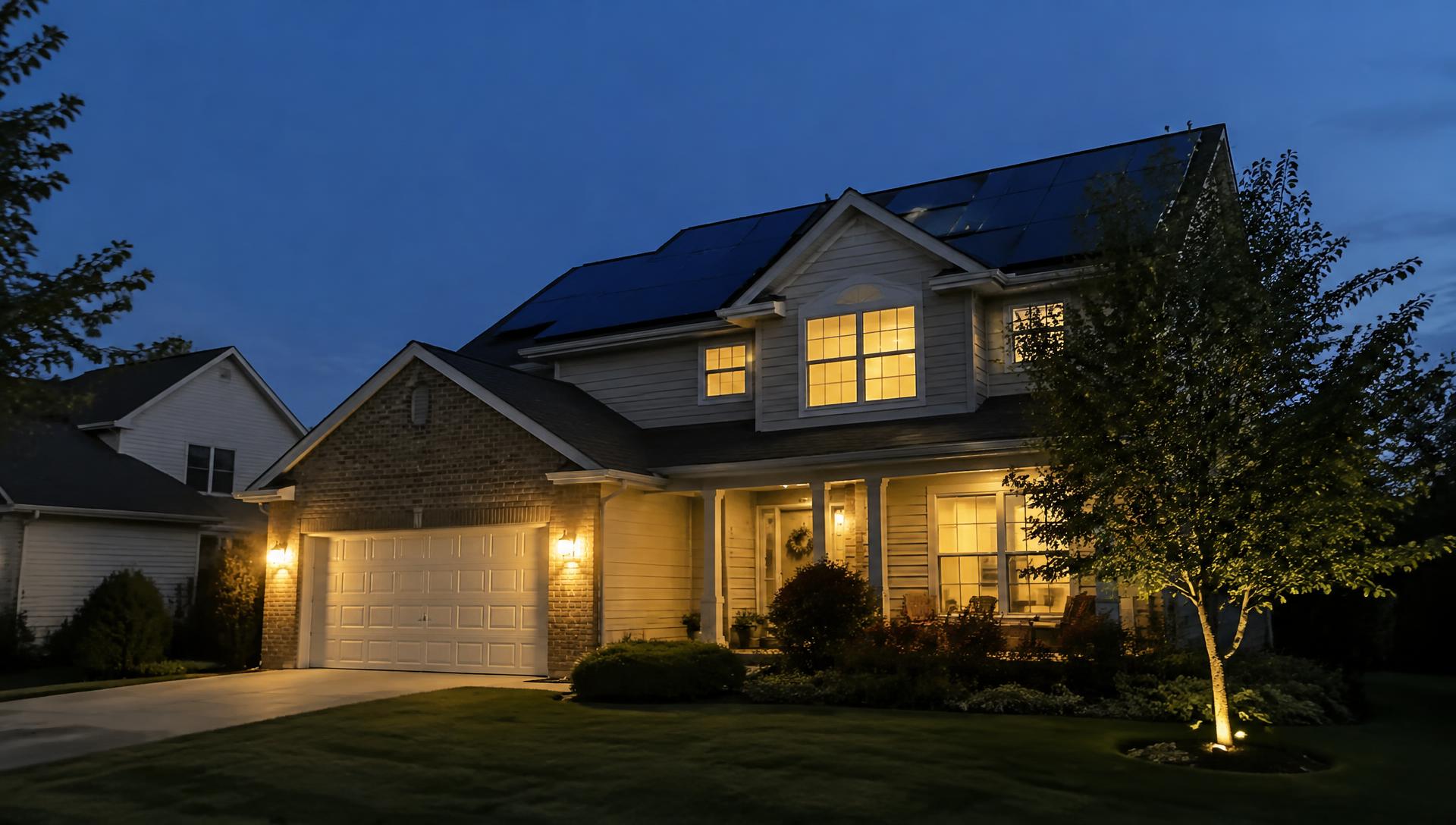
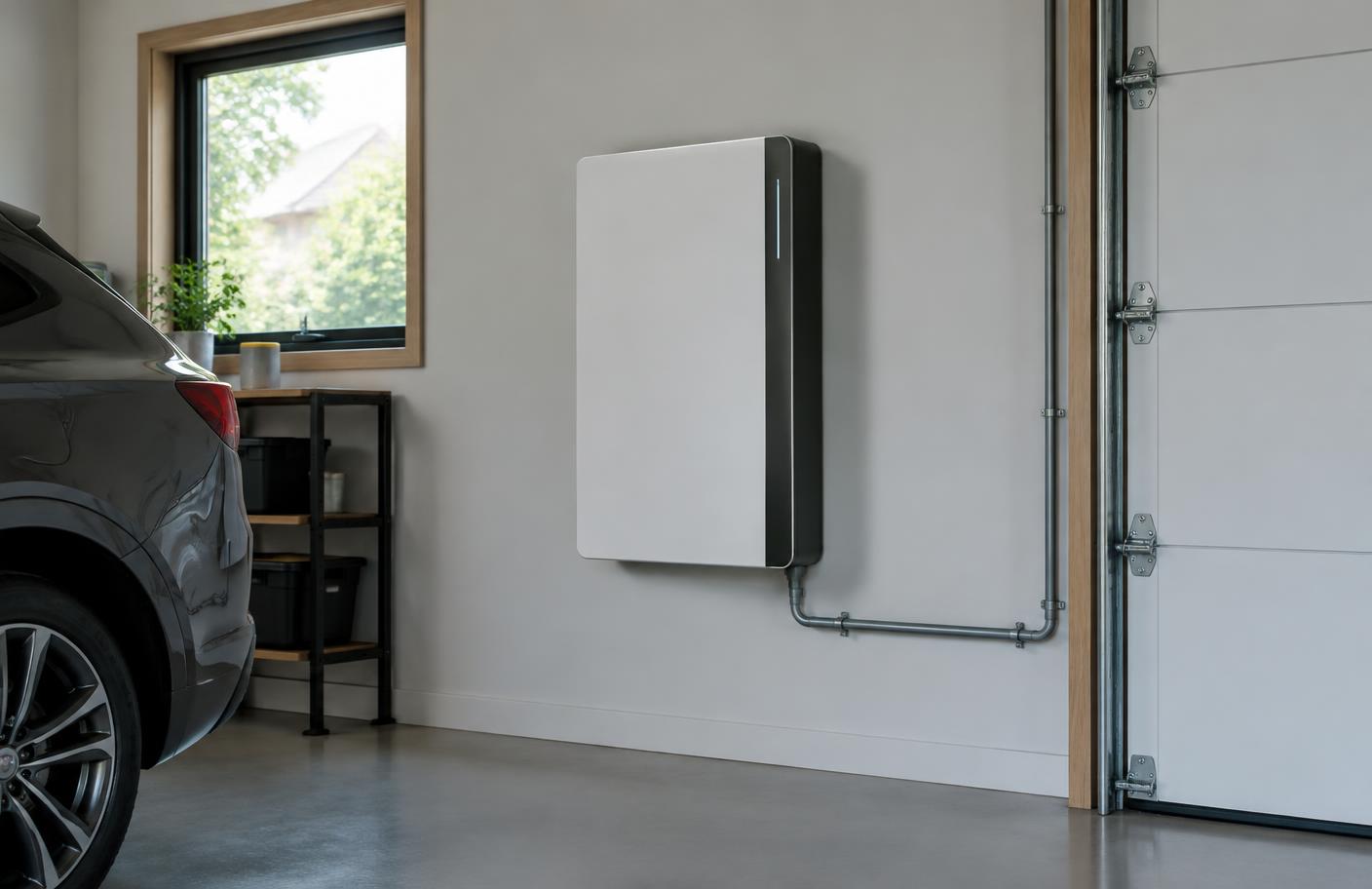
A home battery stores electricity, either from your solar panels during the day or from the grid, and releases it when you need it. During normal operation it can shift when you use grid power. During an outage, a transfer switch isolates your home from the grid and the battery powers the circuits connected to it.
Two things most sales pitches skip:
A battery does not power everything by default. Most installations back up a selected set of circuits (refrigerator, furnace blower, sump pump, internet, some lights and outlets). Whole-home backup is possible but requires more capacity and more equipment.
Solar panels alone do not work during an outage. Standard grid-tied solar shuts off when the grid fails, for the safety of line workers. A battery with the right inverter is what allows solar to keep producing while the grid is down.
Who tends to benefit
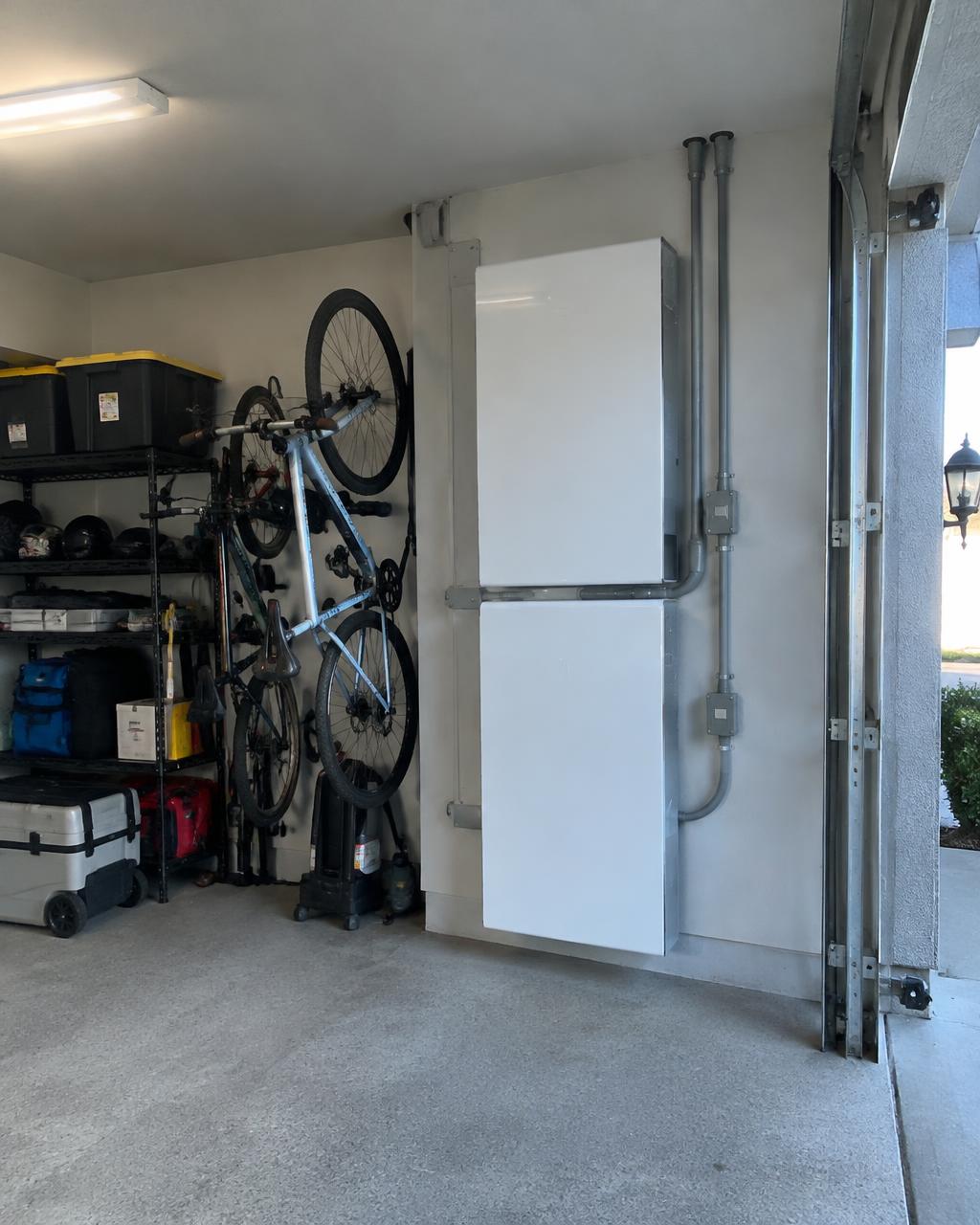
When a battery is worth discussing
- Your home has a sump pump, a well pump, or medical equipment that cannot be without power.
- You work from home and outages cost you money, not just comfort.
- Your area has had repeated multi-hour outages.
- You are a ComEd customer on hourly pricing, where the time you draw from the grid affects your supply cost.
- You already have, or are planning, solar and want it to function during an outage.
When it is usually not worth it: short, rare outages; a tight budget where the money would do more elsewhere; a home with no critical loads. We will say so.
Sizing, in plain terms
How battery sizing works
Batteries are described two ways:
- Capacity (kWh): how much energy is stored. This determines how long your backed-up circuits can run.
- Power (kW): how much can be delivered at once. This determines what can run at the same time, such as a furnace blower and a refrigerator starting together.
Sizing starts with a list of what must stay on, how long you want it to run, and whether solar will be recharging the battery during the day. Two batteries of the same brand can serve two households very differently, which is why we start with your circuits and not a product.
Batteries, ComEd, and Illinois programs
What Illinois rules say about batteries
- ComEd offers a Distributed Generation Rebate for energy storage installed with renewable generation. For residential and small commercial customers it is $300 per kWh of nameplate storage capacity; for commercial and industrial customers it is $250 per kWh. The rebate comes from the utility, not from Illinois Shines, and the decision to take the related generation rebate is not reversible. Source: Illinois Shines Consumer FAQs (Incentive Payments); ComEd Net Metering FAQ (2025).
- Whose rebate it is depends on how the system is owned. Under a lease or power purchase agreement, the system owner, not the homeowner, may receive it. Ask, and get the answer in writing. See Solar Financing Options.
- Battery-only installations (no solar) are possible. Program eligibility differs, and the licensed partner confirms what applies to your project.
Read more: How solar billing works for ComEd customers after net metering changed.
What the consultation covers
What you get from a battery backup consultation
- A list of the circuits you want protected, built with you on the call.
- A plain explanation of partial versus whole-home backup for your home.
- How a battery would interact with existing or planned solar.
- What the ComEd storage rebate is, and who would receive it under each ownership option.
- Honest guidance on whether a battery is worth it for your situation.
- A written summary. Equipment selection, pricing, and electrical design come from the licensed installation partner after a site survey.
Who does what
Our role, and who performs the work
ISI Energy is the sales, education, and project-coordination company. Electrical design, panel work, battery installation, permitting, and interconnection are performed by an independent, licensed partner certified by the Illinois Commerce Commission as a Distributed Generation Installer. Full details: How It Works.
Frequently asked questions
Battery backup questions
Will a home battery power my whole house during an outage?
Only if it is designed and sized for whole-home backup. Most installations back up a selected set of circuits such as the refrigerator, furnace blower, sump pump, and some outlets. Whole-home backup requires more capacity and more equipment, and we discuss both options with you.
Do my solar panels work when the power goes out?
Not by themselves. Standard grid-tied solar shuts off during an outage to protect utility line workers. A battery system with the right inverter allows solar to keep running while the grid is down.
Can I add a battery to solar I already have?
Usually, yes. It depends on your existing inverter and electrical panel. The licensed partner confirms compatibility at the site survey.
Is there a rebate for home batteries in Illinois?
ComEd offers a Distributed Generation Rebate for energy storage installed with renewable generation: $300 per kWh for residential and small commercial customers and $250 per kWh for commercial and industrial customers. Who receives it depends on who owns the system. Source: Illinois Shines Consumer FAQs; ComEd Net Metering FAQ, 2025.
How long will a battery run my home?
It depends on the battery's capacity and what is connected to it. A battery powering only a refrigerator, furnace blower, and a few lights lasts far longer than one powering central air conditioning. We size from your list of critical circuits.
Does ISI Energy install batteries?
No. ISI Energy is a sales, education, and project-coordination company. Installation is performed by an independent, licensed partner certified by the Illinois Commerce Commission as a Distributed Generation Installer.