Who this is for
Buildings and organizations we typically talk with
- Owner-occupied businesses: offices, light industrial, auto services, warehouses, medical and dental practices.
- Property owners and small landlords with flat or low-slope roofs.
- Houses of worship, schools, and nonprofits in the suburbs.
- Agricultural and rural properties on the edges of Kane, McHenry, and Will counties.
If you lease your space, the conversation starts with your landlord. We can help you frame it.
What changes when the building is commercial
Five differences between commercial and residential solar in Illinois
1. Your bill has a demand component. Many commercial rates charge for your peak demand (kW) as well as energy used (kWh). Solar reduces energy charges directly; its effect on demand charges depends on when your peaks occur. We walk through your actual bill rather than assume.
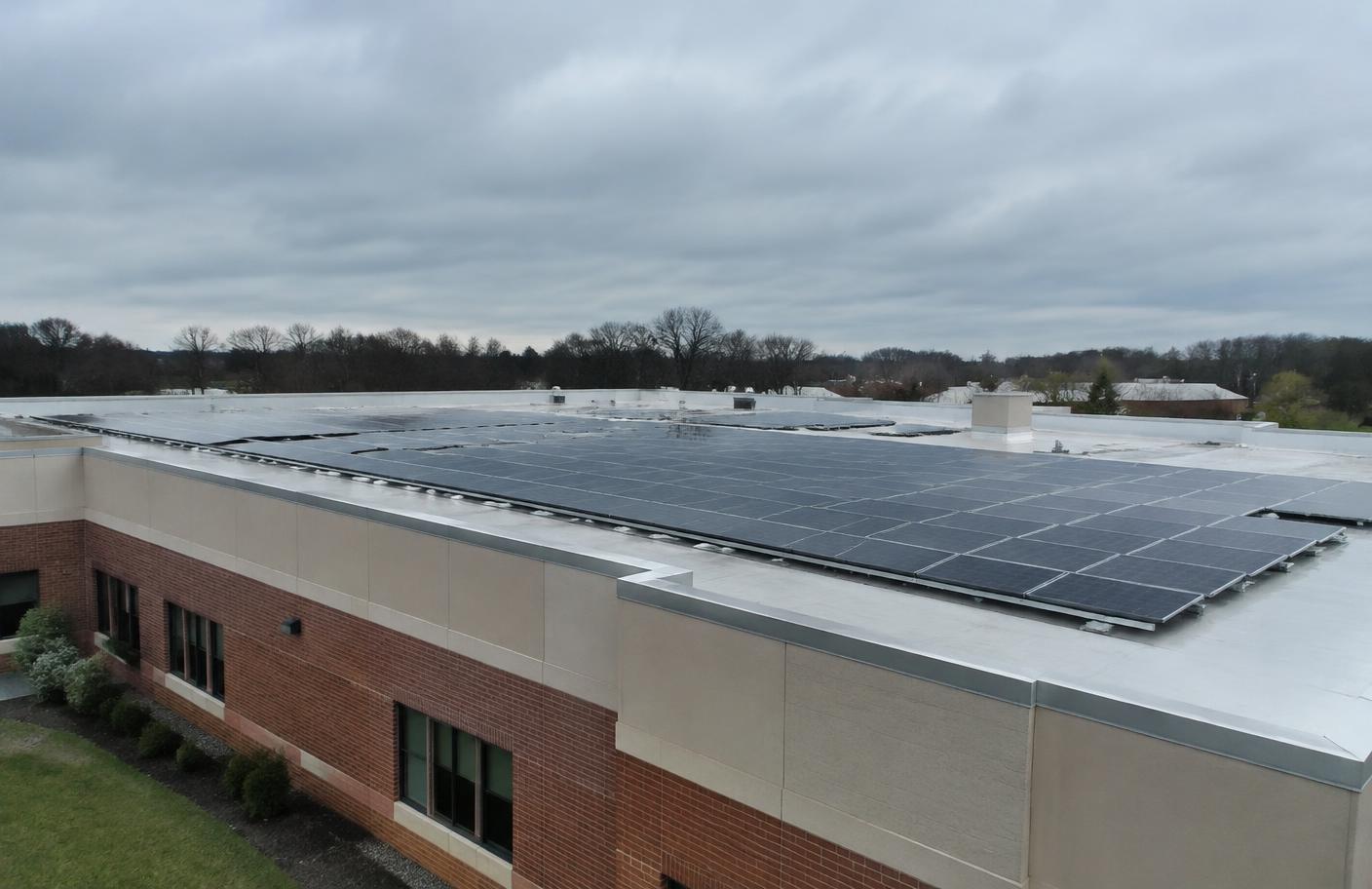
2. Roof type and warranty. Flat roofs often use ballasted racking that does not penetrate the membrane. Your roofing warranty may require the roofer's sign-off before anything is placed on it. We raise this before design, not after.
3. Utility rules differ by customer class. For ComEd, the Distributed Generation Rebate for commercial and industrial customers is $250 per kW for generation and $250 per kWh for storage, versus $300 for residential and small commercial. Net metering treatment also differs by rate class. Source: Illinois Shines Consumer FAQs (Incentive Payments). We confirm your rate class with you.
4. Ownership and tax treatment. Businesses can buy, finance, or enter a third-party-owned arrangement. Tax treatment differs by structure and is a question for your accountant; we will not give tax advice and we flag the question early so your CPA is in the loop.
5. Illinois Shines categories and timing. Illinois Shines (the Adjustable Block Program) has separate categories and capacity blocks for larger projects, and capacity is released annually in June. Where your project falls affects timing. Source: illinoisshines.com.

What the consultation covers
What a commercial solar consultation with ISI includes
- Review of 12 months of utility bills, including the rate schedule and any demand charges.
- Satellite review of the roof (or ground area) and a conversation about structure, membrane age, and access.
- Plain-language explanation of ownership options: purchase, financed purchase, lease, and power purchase agreement, with the questions each raises for a business. See Solar Financing Options.
- How Illinois Shines applies to commercial projects and what the Disclosure Form will contain. See How Illinois Shines works.
- Whether EV charging for employees or customers, or battery storage for critical loads, belongs in the conversation. See EV Chargers and Battery Backup.
- A written summary you can forward to a partner, a board, or your accountant.
Pricing and engineering come from the licensed installation partner after a site survey. We coordinate that step if you choose to proceed.
Who does what
Our role, and who performs the work
ISI Energy is the sales, education, and project-coordination company. Design, engineering, permitting, installation, and interconnection are performed by an independent, licensed partner certified by the Illinois Commerce Commission as a Distributed Generation Installer. You will know the partner's legal name before you sign anything with them. Full details: How It Works.
Questions to bring to the table
What to ask before any commercial solar agreement
1. How does this design affect my demand charges, not just my kWh?
2. Who is responsible for roof warranty coordination and in writing?
3. Who owns the system, the RECs, and any utility rebate under this structure?
4. What are the maintenance and monitoring responsibilities, and whose are they?
5. What happens at a sale of the building or a change of tenant?
6. Which ICC-certified installer performs the work, and what is their certificate number?
Frequently asked questions
Commercial solar questions
Does ISI Energy install commercial solar systems?
No. ISI Energy is a sales, education, and project-coordination company. Engineering and installation are performed by an independent, licensed partner certified by the Illinois Commerce Commission as a Distributed Generation Installer, which we identify to you before you sign anything with them.
Can a nonprofit or church use solar in Illinois?
Yes. Nonprofits participate in Illinois Shines, and Illinois Solar for All has categories for qualifying nonprofits and public facilities. Eligibility and structure vary, so we walk through both programs with you and point you to the program sites for the rules.
Will solar cover my whole electric bill?
No. Commercial customers remain utility customers and continue to receive a bill. Solar offsets energy charges; the effect on demand and fixed charges depends on your rate and usage pattern. We review your actual bill rather than estimate.
Does a flat roof work for solar?
Often, yes. Flat and low-slope roofs typically use ballasted racking with panels tilted toward the sun. Roof condition, membrane type, and warranty terms determine whether it is appropriate, and the licensed partner confirms this at the site survey.
What does the consultation cost?
Nothing. It is a video call, usually 30 to 45 minutes for commercial properties, followed by a written summary.