What rooftop solar does, in one paragraph
How a home solar system works
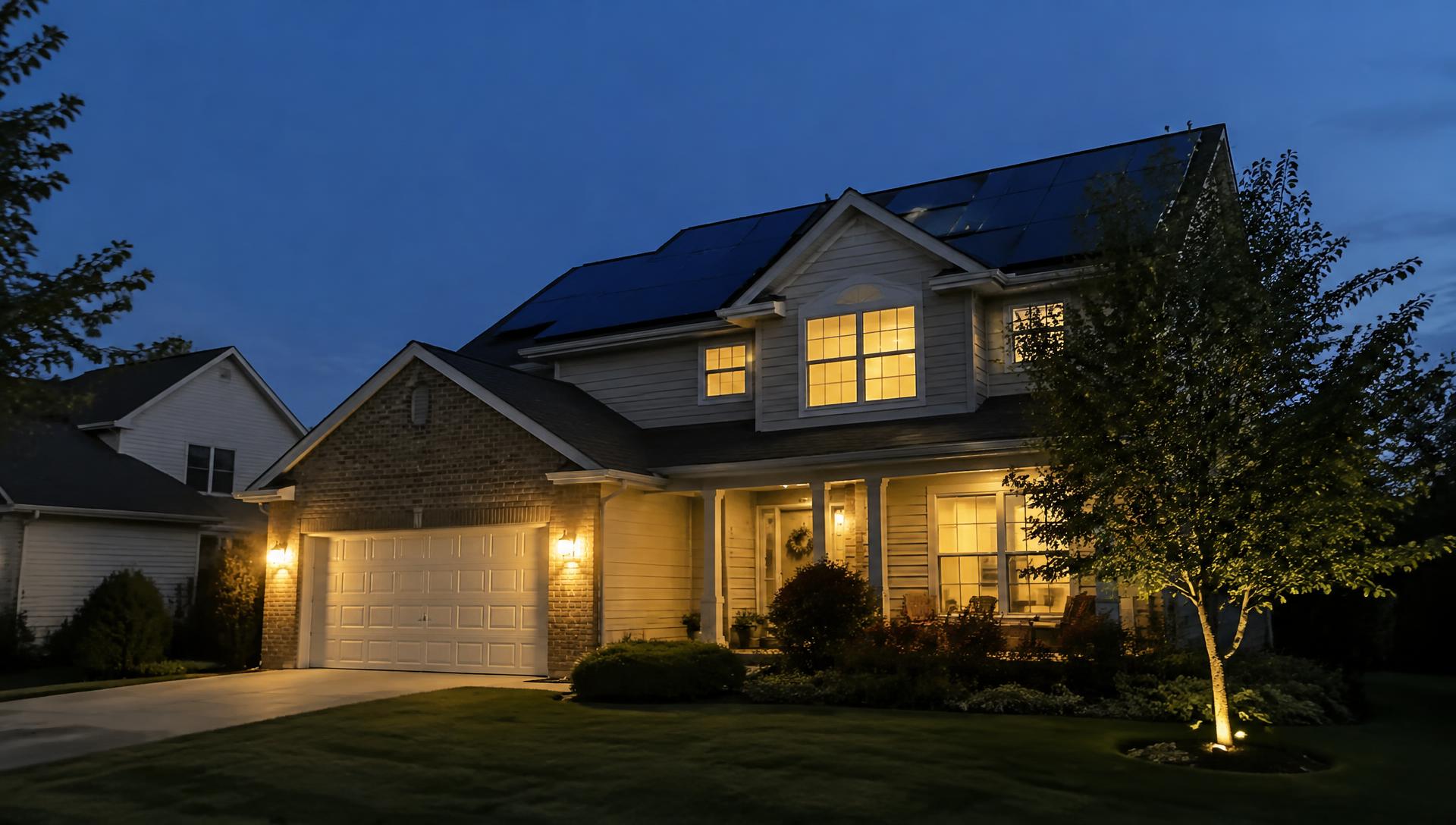
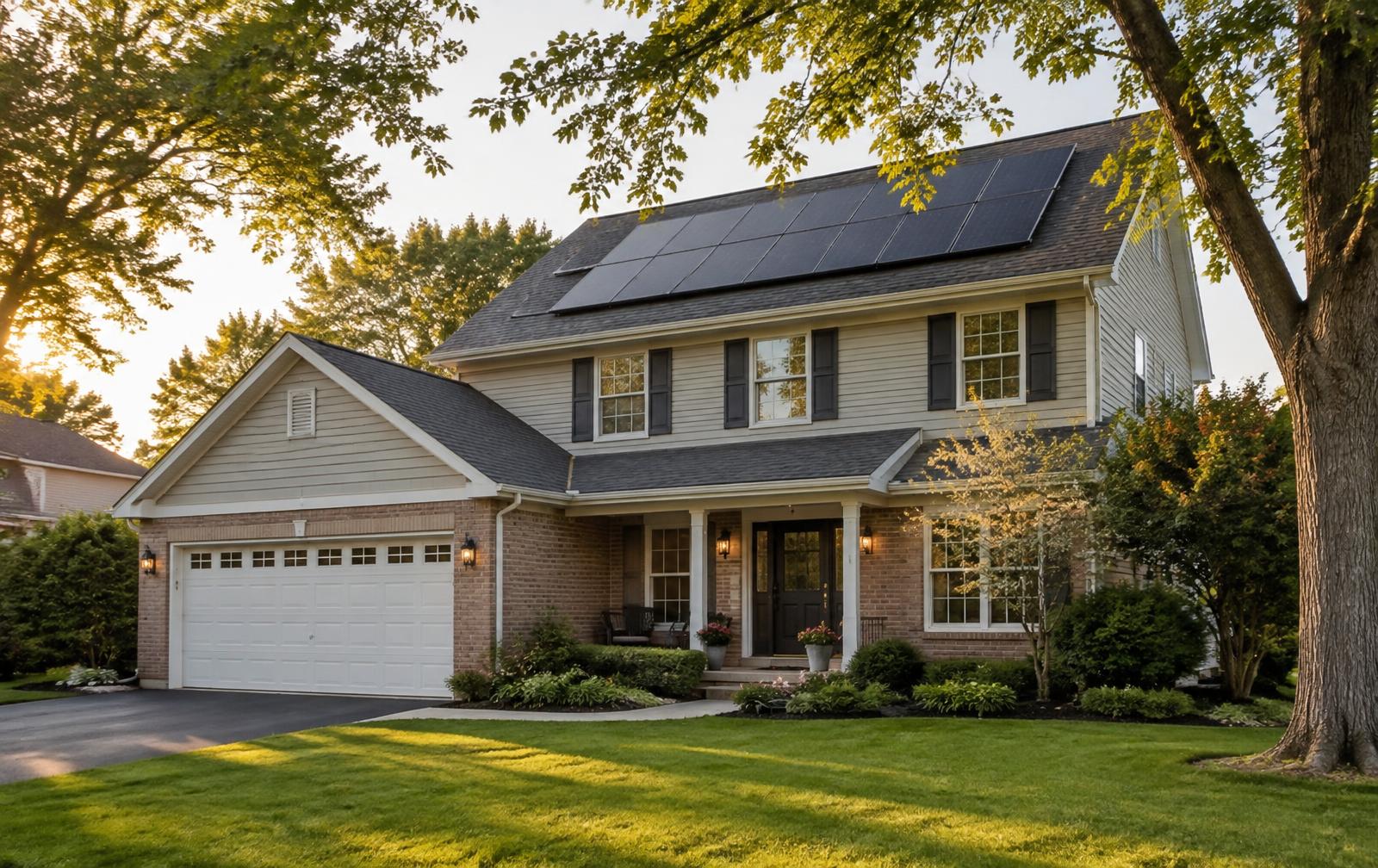
Panels on your roof turn sunlight into direct-current electricity. An inverter converts it to the alternating current your home uses. During the day your home runs on solar first and pulls the rest from the grid. When the panels make more than the house is using, the extra flows to the grid and your utility credits you for it under its current rules. At night you buy power from the grid as usual, unless you also have a battery. You remain the utility's customer and you still receive a bill.
That last sentence matters. Anyone who tells you your electric bill will disappear is not describing how solar works in Illinois.
What makes a home a good or poor fit
Is my home a good fit for solar?
We check five things, and we will tell you plainly if any of them is a problem.
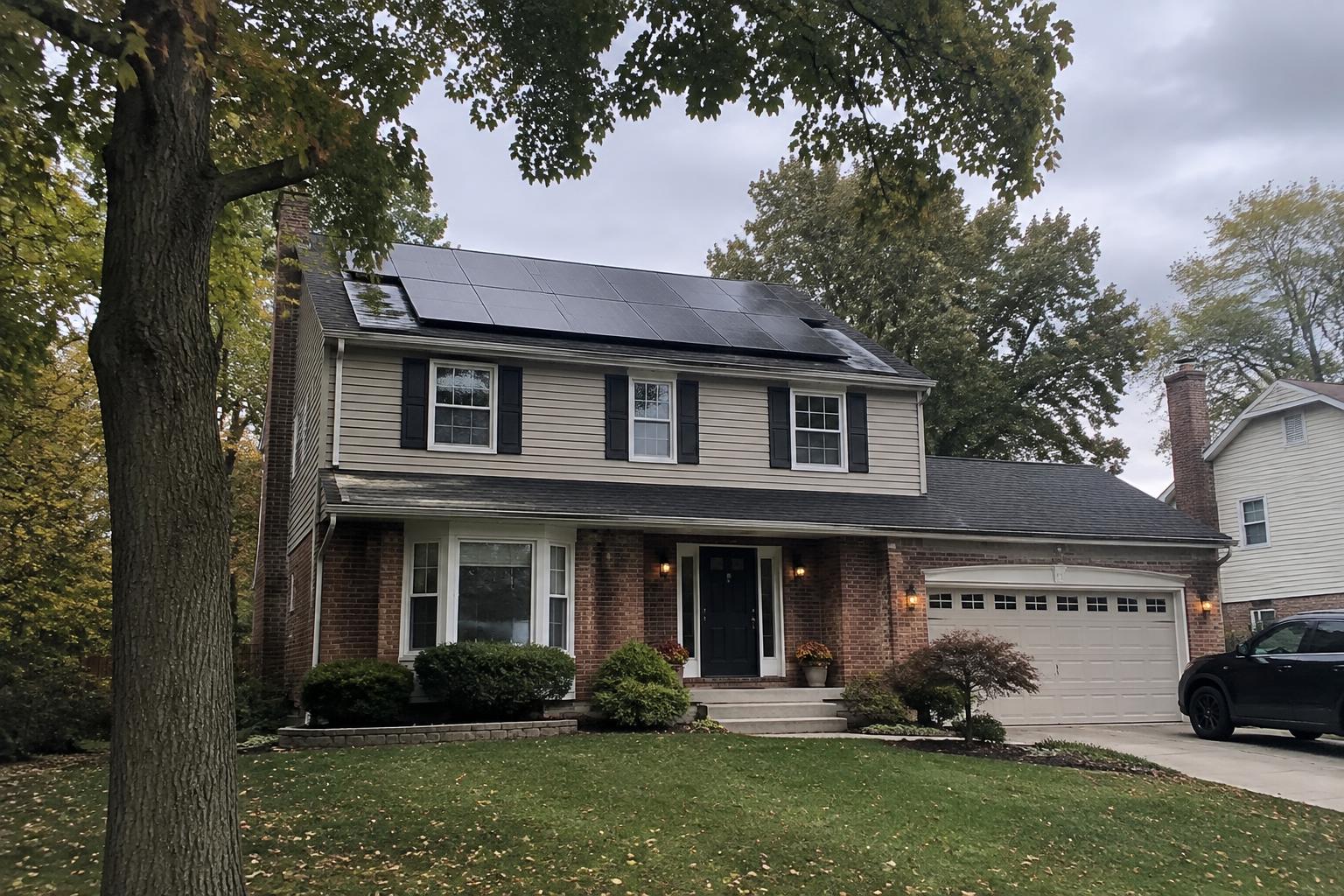
Roof direction and pitch. South-facing roof sections produce the most. East and west still work in many cases. North-facing sections are usually left off the design.
Shade. Mature trees, a taller neighboring home, or a chimney can shade panels for part of the day. Some shade is manageable with the right equipment; heavy shade is a reason not to proceed.
Roof age and condition. Panels are expected to be on the roof for decades. If your shingles are near the end of their life, replacing the roof first is usually the right order. ISI does not perform roofing work, and we will say so rather than talk around it.
Electric usage. We look at 12 months of bills. A home that uses little electricity has less to offset, and a smaller system may or may not be worth the effort.
Utility and billing rules. ComEd customers who interconnect new systems on or after January 1, 2025 receive supply-only net metering credits (credits apply to the supply portion of the bill, not delivery). Naperville, Winnetka, St. Charles, and a few other suburbs run their own municipal utilities with their own rules. Which utility serves your address changes the math, so we check this first. Source: ComEd Net Metering FAQ (2025); Illinois Shines Consumer FAQs. Read more: How solar billing works for ComEd customers after net metering changed.
What the consultation covers
What you get from a residential solar consultation
- A review of your last 12 months of electric bills, so the conversation is about your usage, not an average.
- A satellite look at your roof with the usable sections identified.
- A plain-language explanation of how your specific utility credits exported solar in 2026.
- The four ways to pay for a system (purchase, loan, lease, power purchase agreement) and who owns what under each. See Solar Financing Options.
- How the Illinois Shines program works and what the Disclosure Form you would receive from an Approved Vendor contains. See How Illinois Shines works.
- Whether a battery or EV charger is worth discussing for your household. See Battery Backup.
- A one-page written summary afterward. No proposal to sign, no deposit.
What it does not include: a price quote. Pricing comes from the licensed installation partner after a site survey, and it comes with the Illinois Shines Disclosure Form the law requires. We think you should hear the explanation before you see a number.
Who does what
Our role, and who performs the work
ISI Energy is the sales, education, and project-coordination company. We explain, we coordinate, and we stay your point of contact. All installation, electrical, permitting, and interconnection work is performed by an independent, licensed partner certified by the Illinois Commerce Commission as a Distributed Generation Installer, as Illinois requires. You will know the partner's legal name before you sign anything with them, and you can verify their certification yourself. Full details: How It Works.
Questions to ask any solar company
Bring these questions to every solar conversation
1. Who is the Illinois Shines Approved Vendor on this project, and can I see the Disclosure Form before I sign?
2. Which company holds the ICC Distributed Generation Installer certificate, and what is the certificate number?
3. Under this agreement, who owns the system, who receives the REC payments, and who receives any utility rebate?
4. How does my utility credit exported electricity today, and is that written into the Disclosure Form?
5. What happens if I sell the house?
6. What are the production assumptions, and what happens if the system produces less?
7. Is there an escalator in the payment, and what is it?
We will answer every one of these for any option we present. If another company will not, that tells you something.
Frequently asked questions
Residential solar questions
Will solar eliminate my ComEd bill?
No. You remain a ComEd customer and continue to receive a bill. For systems interconnected on or after January 1, 2025, net metering credits offset the supply portion of the bill only; delivery charges and fixed charges still apply. Source: ComEd Net Metering FAQ, 2025.
Does ISI Energy install solar panels?
No. ISI Energy is a sales, education, and project-coordination company. Installation is performed by an independent, licensed partner certified by the Illinois Commerce Commission as a Distributed Generation Installer. We identify that partner to you before you sign anything with them.
How long does the process take if I decide to move forward?
Typical steps are site survey, design, permit, installation, inspection, and utility permission to operate. The timeline depends on your municipality's permit office and your utility's interconnection queue. We give you a realistic range for your town during the consultation rather than a single number here.
Do solar panels work in Illinois winters?
Yes, with lower output. Shorter days, a lower sun angle, and occasional snow cover reduce winter production. Systems are designed around annual production, not a single month. Source: Illinois Shines Consumer FAQs.
Can my homeowners' association stop me from installing solar?
Illinois law (the Homeowners' Energy Policy Statement Act, 765 ILCS 165) limits how associations can restrict solar, though they may adopt reasonable rules about placement. We can point you to the statute, and your association's energy policy statement is the document to request.
What does the consultation cost?
Nothing. It is a 20 to 30 minute video call with a written summary afterward. There is no deposit and nothing to sign.